

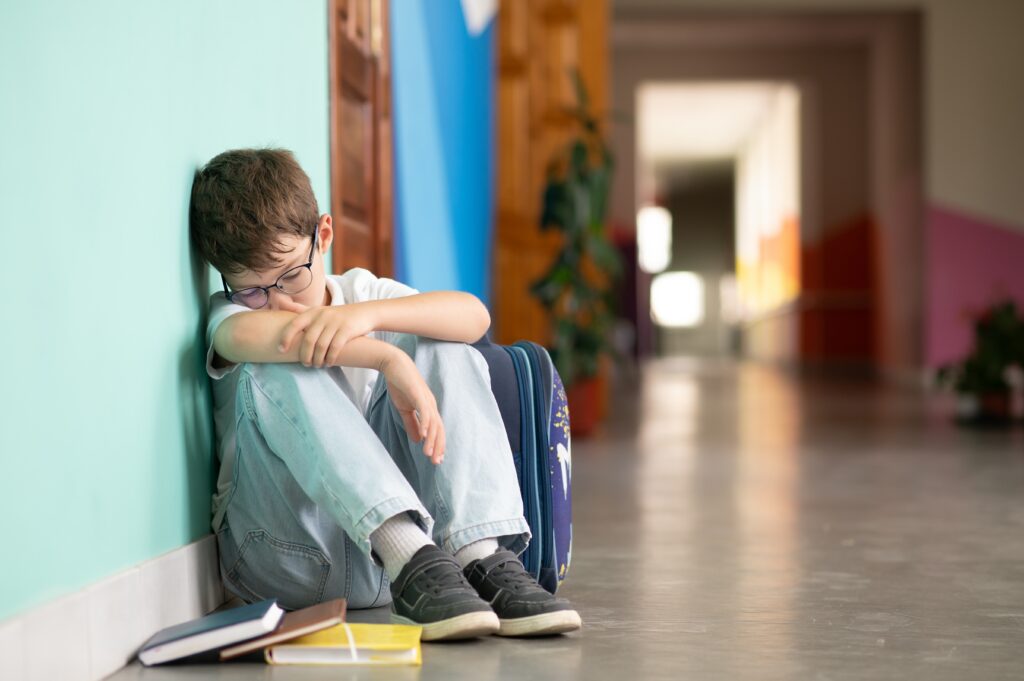
Most children occasionally say they do not want to go to school. A difficult test, friendship conflict, poor night’s sleep, or simply wanting to stay home can make school feel unappealing. Usually, this reluctance is temporary, and the child is still able to attend and participate in the school day.
For some children and teenagers, however, going to school causes significant and persistent emotional distress. They may experience stomachaches, crying, panic, or intense worry that repeatedly interferes with attendance. This pattern may be school refusal, which is different from occasional reluctance or mild school anxiety.
Understanding the difference can help parents recognize when a child needs additional support.
What Is School Anxiety?
School anxiety refers to fear, nervousness, or worry related to school. It can occur at any age and may be triggered by tests, presentations, academic expectations, social situations, changing schools, or separating from a caregiver.
Some anxiety is normal. A child might feel nervous before an important exam or complain about attending school after a long vacation but still get ready, attend, and settle into the day.
School anxiety becomes more concerning when the distress is intense, persistent, or begins interfering with daily functioning.
PAC Psych offers anxiety and phobia treatment for children and adolescents when anxiety begins affecting a child’s everyday life.
What Is School Refusal?
School refusal describes a pattern in which emotional distress makes it consistently difficult for a child or teenager to attend or remain at school. It is not a psychiatric diagnosis itself. Instead, school refusal may be associated with anxiety disorders, depression, adjustment difficulties, trauma-related concerns, or other emotional challenges. School refusal can involve intense fear surrounding attendance and may emerge after vacations, illnesses, moves, school changes, or other disruptions.
The key difference between occasional reluctance and school refusal is usually persistence and impairment. A child who does not want to attend on Monday morning but ultimately goes to school is experiencing something different from a child who regularly misses class because their distress feels overwhelming.
Common Warning Signs of School Refusal
School refusal does not look the same for every child. Some children clearly express fear, while others primarily experience physical symptoms or behavioral changes.
Parents may notice frequent headaches, stomachaches, nausea, or other physical complaints before school; crying or panic during the morning routine; repeated requests to stay home or leave school early; difficulty sleeping on school nights; or anxiety that intensifies on Sunday evenings.
Other signs can include frequent absences or lateness, refusing to get dressed or leave home, fear of separating from caregivers, irritability surrounding school, or withdrawing from friends and activities.
Physical symptoms should not automatically be dismissed as excuses. Anxiety can cause genuine physical sensations. However, recurring symptoms should also be discussed with a pediatrician to rule out medical causes.
What Causes School Refusal?
There is no single cause of school refusal. Identifying what is driving the avoidance is an important part of helping a child return to regular attendance.
Anxiety is a common factor. Separation anxiety can make leaving a caregiver difficult, while social anxiety may create fear about classmates, presentations, cafeterias, or other social situations. Generalized anxiety can lead to persistent worries about grades, mistakes, schedules, or performance.
Academic or learning difficulties can also contribute. A child who struggles with reading, attention, organization, or another academic skill may begin associating school with embarrassment or failure. When learning or attention concerns are suspected, a neuropsychological evaluation can help clarify a child’s strengths and challenges.
Bullying and social difficulties are other potential causes. Peer exclusion, friendship conflicts, embarrassment, or bullying may make school feel unsafe or overwhelming.
How Can Parents Help With School Refusal?
Start by listening without immediately focusing on attendance. During a calm moment, ask specific questions such as, “Which part of school feels hardest?” or “When during the day do you feel most worried?” These questions may reveal academic, social, or emotional concerns that are difficult for a child to explain.
Parents should also communicate with teachers, counselors, and school psychologists. School staff may notice peer conflicts, academic struggles, or anxiety that is not visible at home.
Maintaining predictable routines can also help. Consistent sleep, morning, and transportation routines reduce uncertainty. Although staying home may provide immediate relief from anxiety, repeated avoidance can sometimes make returning to school increasingly difficult.
For significant school refusal, parents, therapists, and school staff may develop a gradual return plan with manageable steps and appropriate accommodations.
When Can Professional Support Help?
Professional support may be beneficial when anxiety repeatedly causes absences or lateness, produces severe emotional or physical distress, affects friendships or family life, or continues despite support from parents and school.
Cognitive behavioral therapy (CBT) can help children understand anxious thoughts, develop coping strategies, and gradually face situations they have been avoiding.
Parents can also play an important role in treatment. PAC Psych offers SPACE (Supportive Parenting for Anxious Childhood Emotions), an evidence-based parent-focused treatment for childhood and adolescent anxiety.
Supporting a Successful Return to School
School refusal is not simply stubbornness or a child deciding they dislike school. It can reflect genuine anxiety or emotional distress that has become difficult to manage.
Parents can help by recognizing patterns, listening carefully, working with school staff, maintaining supportive routines, and addressing the underlying cause of avoidance. When school anxiety becomes persistent or significantly interferes with attendance, professional guidance can help families develop an appropriate path forward.
PAC Psych provides child and adolescent therapy for anxiety and other emotional concerns that may contribute to school avoidance. Families concerned about persistent school refusal can contact PAC Psych to learn more about available support.